NET-ZERO is about the reduction of Carbon Dioxide emissions, to a zero-in zero-out emissions standard. It's sort of like the idea of a Ponzi Scheme, where you're offsetting carbon emissions thru carbon credits, which you can buy, or using "so called Green" technologies.

So let's say that you build a house, for it to be NET ZERO you would have to offset the costs of the carbon emissions while building it, use the most efficient windows, insulation, appliances, furnace, etc. In fact the furnace would have to be Electric, likely a Heat-Pump, not a gas fired furnace, which honestly is the least expensive, and is far more efficient at creating heat than a heat pump, considering it's using fire. So already you're having to spend more money. The stupidity of saving the planet, simply by paying more money. It doesn't make sense.
It's all about "Offsetting Carbon Footprints" ... which begs the question, why are they building Wind and Solar?
How does Wind and Solar play into Net-ZERO?
Wind, and solar, are the two hot ticket items, with WIND being toted as the cheapest form of energy capture systems. They are toted as "NET-ZERO" as they, supposedly, will offset their carbon emissions of manufacture, by their end of life, which is in approximately 10-20 years.
 The problem here is that the wind doesn't always blow, and there are times where the wind blows too much, and you're having to apply the brakes on the mill to prevent the turbines from ripping themselves apart.
Not to mention, the insanity of the amount of resin used to create the huge fibreglass turbine blades, which is notoriously damaging to the environment.
On top of all this, they require large areas of land, and will provide a small percentage of the total power on the grid, with the main grunt work being done by the most reliable, cleanest, and most efficient energy production system that we have at our disposal, Nuclear.
Solar, being the other NET-ZERO hero, is also quite useless, as they are quite inefficient, lose efficiency, and require constant maintenance, and are prone to damage by the weather, and again, require huge amounts of land to be viable.
When you say that Wind and Solar take a lot of land, what do you mean?
With SOLAR Farms, they HAVE to be clear of all trees, and other foliage, aside from grasses, as they require direct access to the sun, without any shade. These lands could also have been used for actual

agriculture/food production instead.
What you're ending up with, believe it or not, are trees being cut down, to make room for green energy?
Someone please make it make sense, because it baffles me. Forests are our natural carbon sinks. As trees grow, they absorb carbon from the atmosphere, and use that captured carbon to build up their branches, trunks, and root system. They use it to produce leaves, which give us oxygen to breathe, give us shade, and actual cool the air around us, as the leaves actually evaporate water into the air, taking a bit of heat away with it.
We're destroying natural carbon sinks for green energy production, then the governments claim that Carbon Emissions have risen dramatically over the years, instead of going down.
Well, ya, for one, India and China use large amounts of Coal Fired power generation, and we're cutting down forests to make room for "Green Energy"
What is a viable alternative to Petroleum Based Fuel Fired Plants and Coal Fired Plants?
The best non-petroleum based, or coal fired plants, is simple. Nuclear.
I know, it sounds like a really scary word, especially for those of us who remember Duck and Cover drills. I'm not old enough to remember the Open Air Nuclear tests, but I'm old enough to remember Chernobyl, and the Space Shuttle Challenger explosions. I was quite leery of Nuclear for many years, until I actually learned the truth behind the lies.

For one, Chernobyl was a Soviet Disaster, there was no containment facility, and there were a lot of mistakes made in general in that scenario. Have there been mistakes made in the USA and Canada? Absolutely.
But when you look at the Fukushima disaster in 2011, it had a containment vessel, which was breached thru a series of explosions due to lost cooling when the coast was slammed by a massive tsunami, which followed a huge earthquake, taking out the backup systems (diesel generators) which ran the cooling systems. Even tho the reactor was shut down, the cooling systems were knocked offline.
Again, many things were compounded by Human Errors, but it wasn't ultimately what actually triggered the event, as that was a magnitude 9 Earthquake that spawned the Tsunami.
However the overall amount of Nuclear Plants that are in use today, such as in France alone, or the plant in Zaporizhia, Ukraine, that is in the middle of a warzone, and had the dam destroyed, which provided fresh water to the cooling pools, and has taken direct hits from artillery, and missile strikes, yet has not breached, or exploded.
Nuclear Power has come a long way.
Okay, but what about Nuclear Waste?
That's been a big scary word for quite a while. When you consider what Nuclear Waste is, it is actually carbon rods, not some green goo. Those rods are stored in large drums, sealed, and contained on the Nuclear Plant grounds for containment, and cooling.
Once they have cooled sufficiently, they are then moved again to a contained storage area. You can track the fuel, and waste, from start to finish with Nuclear.
The amount of Nuclear Waste generated in North America would be the size of 1 football field, about 10 yards deep. As I said before, you can trace Nuclear waste from the place it was mined, to where it is stored. From start to finish, entirely traced. What other industry can do that?
How do EVs play into the NET-ZERO Agenda?
EVs are interesting, as they are straight out a way to 'offset' the carbon footprint, nothing more. It's just moving the carbon exhaust emissions from the tailpipe, to the manufacturer and power generation. The

funny thing is that it's just greenwashing, and giving the consumer "feel good" vibes, because they aren't actively burning any kind of "FOSSIL" fuels themselves. In truth, it's all a complete joke.
If you start at the mining side of things, extracting the minerals for the batteries, and components of the vehicle require massive amounts of oil. Sure, the mining equipment is mostly electric, as electric motors provide instant, and huge amounts of, torque, where as a gasoline, or diesel engine, has to rev up to provide the same torque. Electric motors provide maximum torque at 0 RPM, and the band kind of goes downhill from there.. again, why they use Electric motors, because they only rotate when doing some kind of work, while a gasoline/diesel engine continues to operate, regardless of whether they're doing work or not..
Here's the thing, there are no grid hookups for those mines, as they're entirely powered by diesel fired generators. In fact, this is where it gets interesting, as solar farms, and wind mills require a diesel generator as a backup. IE, during times of low-wind, or low-solar, output, will require a diesel backup generator to provide enough power to the grid. Many EV chargers are powered by large diesel generators, especially semi-truck charging stations, which have to provide huge amounts of electricity for the giant batteries in these vehicles.
So the whole NET-ZERO with EVs is all, again, smoke and mirrors.
Trying to stop OIL seems to be some odd agenda by the green zealots, without realizing that everything, from your cell phone, to the food you eat, the electricity you utilize, computer products, etc, are all brought to you from oil. There is no way around it. Everything in existence today that has been made my human hands is thru the consumption of oil. Whether it's fresh lumber for a home, or bananas on your counter. Every last product has been because of oil.
Is there anything us, as consumers, can do to offset our carbon footprint?
Of course there is. Buying a new EV, or a new battery operated piece of equipment, is one way of increasing your carbon footprint, as you're putting a demand on these manufacturers to create a new

product, which entails the mining of raw materials, as well as the transportation of that product to your store where you purchase it. When it comes to a vehicle, having an older, well maintained vehicle is far more environmentally friendly, than purchasing a new vehicle, as again, it creates a demand on the market for a product.
Consumerism, planned obsolescence , etc are the main driving factors behind CO2 emissions.
EVs contain a lot of oil, and require the burning of a lot of oil. So keep that car you have for longer, keep it well maintained, and it will last for many more years to come.
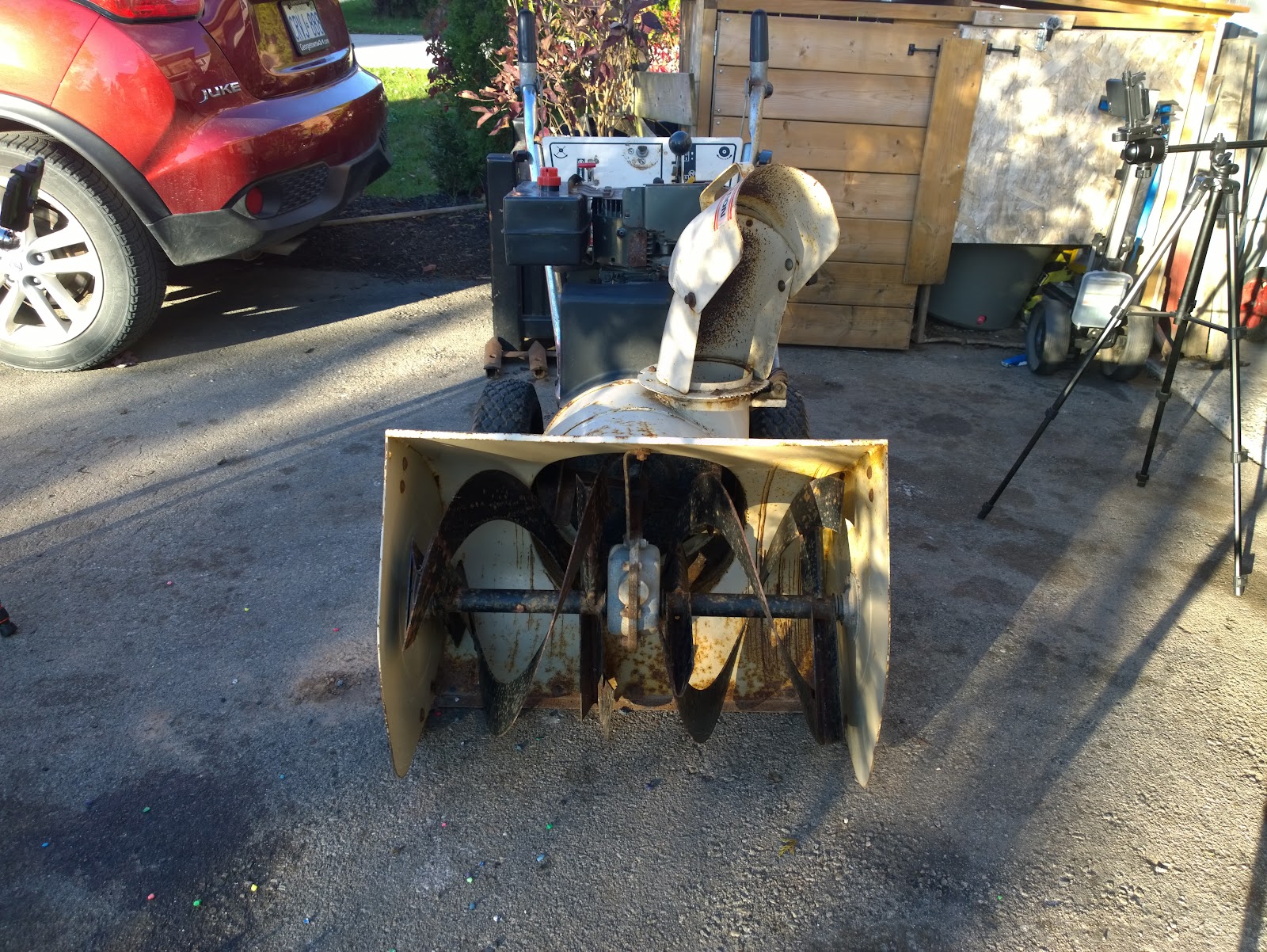
If you have old gas powered equipment, such as a lawnmower, or a snowblower, maintain it.
Those small engines can last for decades with proper maintenance, as they do not operate at all to the extent of the engine in your gasoline powered car, and that engine can last for hundreds of thousands of hours.
 Write your member of parliament, write to congress, tell your friends, and family, and above all, do not vote for people who want to implement these damaging policies.
A proper green transition should not be forced, nor should it cost us our livelihood, and it definitely
shouldn't cost us our homes, but these policies are doing just that.
Driving the costs of goods up faster than inflation.
Anyway guys,
Comment below, follow for more.
Chat soon!